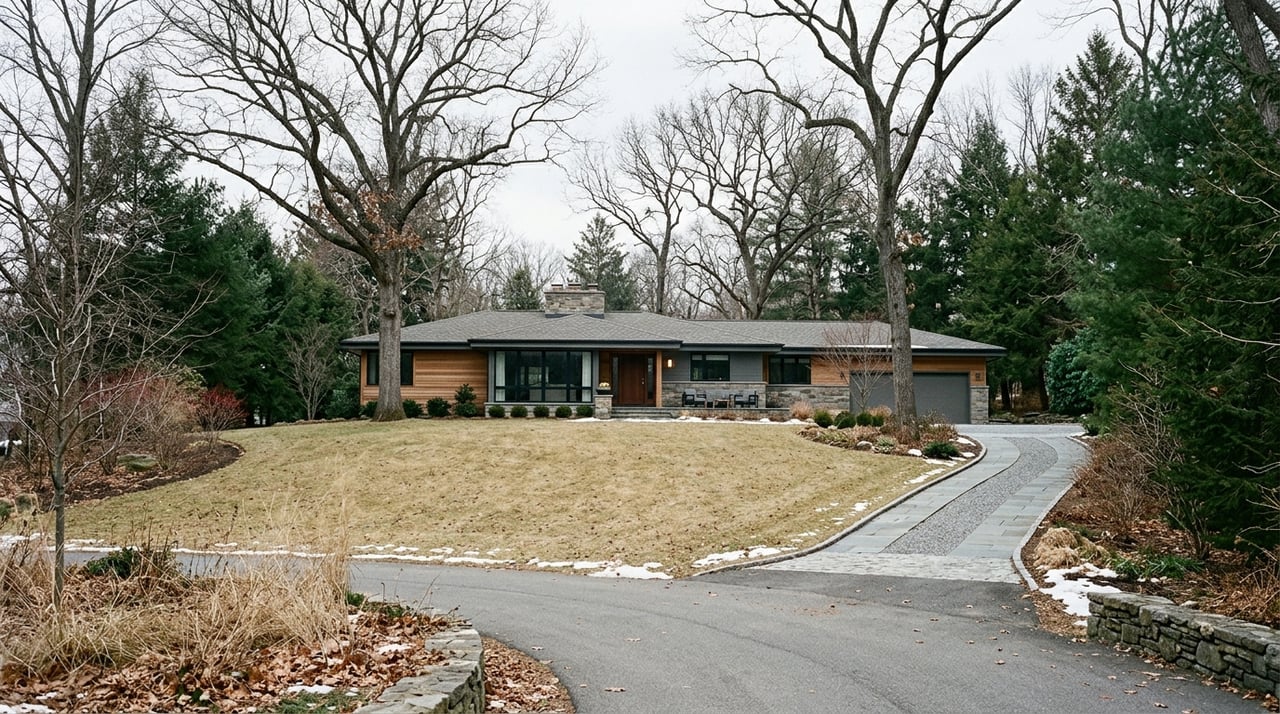
Looking at Oak Hill home values and wondering why two properties with similar acreage can sell at very different price points? In this market, the answer often starts with the land itself. If you are buying, selling, or simply trying to understand your home's position, it helps to know how lot size, privacy, slope, and setting work together in Oak Hill. Let’s dive in.
Oak Hill Is a Parcel-Driven Market
Oak Hill is not a typical subdivision market where you can compare one lot to the next and expect a simple formula. According to the City of Oak Hill, the city covers 8 square miles, has about 1,800 homes, and is entirely residential, with housing on large, tree-filled lots.
That setting shapes buyer expectations from the start. When people look at homes in Oak Hill, they are often evaluating more than square footage and finishes. They are also paying close attention to how the lot feels, how much privacy it offers, and how usable the land really is.
Why Lot Size Matters Differently Here
In many areas, more acreage often suggests more value. In Oak Hill, acreage still matters, but it does not work as a straight line. A larger parcel can be valuable, but only if the site is functional, accessible, and supports the kind of setting buyers want.
Oak Hill's residential zoning framework includes single-family districts with minimum lot sizes ranging from 10,000 square feet to 4 acres. The city also notes that variance review may consider hardships tied to hills, slopes, easements, large trees, and existing construction.
That means two lots with the same acreage may offer very different real-world value. One may have a level building area, easy driveway access, and a strong sense of privacy. Another may lose value in practical terms if steep topography, shape, or site constraints limit what you can do with the land.
Usable Land Often Matters More
When buyers and appraisers look at an Oak Hill property, they are not just asking, "How big is the lot?" They are also asking, "How much of this lot is usable?"
A site with room for outdoor living, easier circulation, and a comfortable setback pattern can feel much more valuable than a larger but constrained parcel. In Oak Hill, that difference can have a meaningful impact on pricing because the market is thin and parcel-level differences stand out more clearly.
Setting Can Influence Value Just as Much
Oak Hill's physical setting is one of its defining features. Large trees, winding roads, and estate-style homesites create a very different experience than a newer planned neighborhood.
That experience matters in pricing. Based on city regulations and market examples in the research, several setting-related traits show up again and again as value drivers: privacy, mature tree cover, level sites, dead-end streets, and estate-scale surroundings.
Privacy Carries Real Weight
Privacy is not just a lifestyle preference in Oak Hill. It is often part of what buyers are specifically paying for.
The city's residential character and tree-filled lots support that premium. Oak Hill also recognizes site features such as large trees and topographic conditions in its variance procedures, which helps explain why buffered settings and homes tucked away from the street often attract strong interest.
Trees Add More Than Beauty
Mature trees can make a property feel established, sheltered, and distinct. In Oak Hill, they also connect directly to the city's identity as a fully residential community with large, wooded homesites.
That does not mean every heavily wooded lot is automatically more valuable. But when tree cover enhances privacy, frames the home well, and supports the overall setting without limiting usability, it can strengthen a property's appeal.
Level Lots Are Often Easier to Value
A level lot tends to be easier for buyers to understand and easier to use. It may offer more straightforward access, more flexible outdoor space, and fewer perceived obstacles than a hillside site.
That is one reason public listing descriptions in Oak Hill often highlight flat or level settings. In a market where site usability matters so much, a level parcel can command attention even when it is not the largest lot available.
Topography Can Change the Equation
Oak Hill's topography adds another layer to value. The city states that some areas have slopes above 15 percent, and steep-slope rules can require soil analysis and may trigger a 2-acre-per-lot requirement in new subdivisions.
For buyers, that means the shape of the land matters almost as much as its size. For sellers, it means your lot's value may depend heavily on where the buildable and functional portions of the site are located.
Hillsides and Steep Slopes Affect Usability
A hillside lot can be beautiful, but it can also be more complex. Driveway design, grading, drainage considerations, and usable outdoor space may all factor into how a buyer sees the property.
In Oak Hill, steep conditions are not rare enough to ignore. They are part of the local valuation picture, which is why comparing one home to another without accounting for slope can lead to the wrong conclusion.
Radnor Lake Adjacency Brings Extra Considerations
Properties near Radnor Lake can have a unique setting, but they can also fall within an impact zone intended to reduce visual and watershed impacts and limit ridge-line clearing. The city's steep-slope guidance makes clear that these protections can affect how land is used and improved.
That does not reduce value by default. It simply means site-specific context matters. A property's location, views, privacy, and restrictions should all be weighed together.
Recent Sales Show Acreage Is Not the Whole Story
Oak Hill's recent public sales data supports the idea that lot size alone does not explain pricing. The sample is small, so broad conclusions should be cautious, but the range is still telling.
For example, the research report notes that 4805 Churchwood Dr sold in July 2023 for $3.225 million on 0.99 acres, while 910 Robertson Academy Rd sold in February 2026 for $5.205 million on the same 0.99 acres. That is a major difference on equal acreage, suggesting that the home itself, its condition, and overall site appeal can outweigh lot size alone.
The same report also highlights 1030 Overton Lea Rd, which sold in December 2025 for $4.313 million on 3.05 acres and was described as a private level lot, and 1038 Tyne Blvd, which sold in September 2025 for $5.5 million on 4.1 acres and was described as a rare estate parcel with privacy and mature trees.
The takeaway is simple: acreage matters, but acreage by itself is not the pricing formula. In Oak Hill, buyers tend to value a combination of parcel size, usability, privacy, and build quality.
What Buyers Should Compare First
If you are buying in Oak Hill, it helps to compare properties on more than bedroom count or interior finishes. A home with similar square footage may offer a very different long-term experience depending on the lot.
Start with these questions:
- How much of the lot appears level and functional?
- Does the property feel private or exposed?
- How much mature tree cover does the site have?
- Is the home on a quiet street, corner lot, or dead-end setting?
- Are there slope, access, or site-planning constraints?
- Does the land support the lifestyle you want today?
In a lower-volume market, these details can matter more than in a neighborhood where homes are built on nearly identical parcels.
What Sellers Should Know About Pricing
If you are selling in Oak Hill, your lot may be helping your value in ways that are easy to overlook. Privacy, a level homesite, mature trees, a tucked-away setting, or a strong sense of separation from the street can all support the story of your property.
That is why a strong pricing strategy should look beyond square footage and recent sales on paper. The best comparisons usually match not only the home, but also the parcel characteristics that buyers notice most in Oak Hill.
A seller with a highly usable 1-acre lot may be better positioned than a seller with more acreage but more constraints. In this market, telling the full story of the setting is often just as important as presenting the house itself.
The Bottom Line on Oak Hill Value
Oak Hill behaves like a luxury market where the parcel carries real influence. Lot size matters, but lot usability, privacy, tree cover, topography, and overall setting often shape value just as strongly.
If you are trying to understand what your Oak Hill home is worth, or which property offers the best long-term value, a close reading of the land is essential. That kind of neighborhood-level analysis can help you avoid oversimplified comparisons and make more confident decisions.
If you want guidance tailored to Oak Hill's parcel-driven market, Barbara Keith Payne offers experienced, broker-led advice for buyers and sellers who want a more precise view of value.
FAQs
How does lot size affect home values in Oak Hill, TN?
- Lot size affects value in Oak Hill, but not in a simple way. Larger parcels can command higher prices, though buyers also weigh privacy, usability, slope, and the home's quality.
Do level lots usually have more value in Oak Hill, TN?
- Level lots often appeal to buyers because they can offer easier access and more functional outdoor space, which may strengthen value compared with a more challenging hillside site.
Why do trees and privacy matter for Oak Hill home prices?
- Trees and privacy matter because Oak Hill is known for large, wooded residential lots, and city rules also recognize site features like large trees and topographic conditions as important parts of the land.
Are larger lots always worth more in Oak Hill, TN?
- No. Recent sales examples in the research show that homes with the same acreage can sell for very different prices, and that build quality, renovation level, and site usability can outweigh extra land.
What should buyers compare when evaluating Oak Hill properties?
- Buyers should compare acreage, slope, level versus hillside siting, privacy, tree cover, access, and overall lot usability, along with the home's size, condition, and design.